


Not With Honour
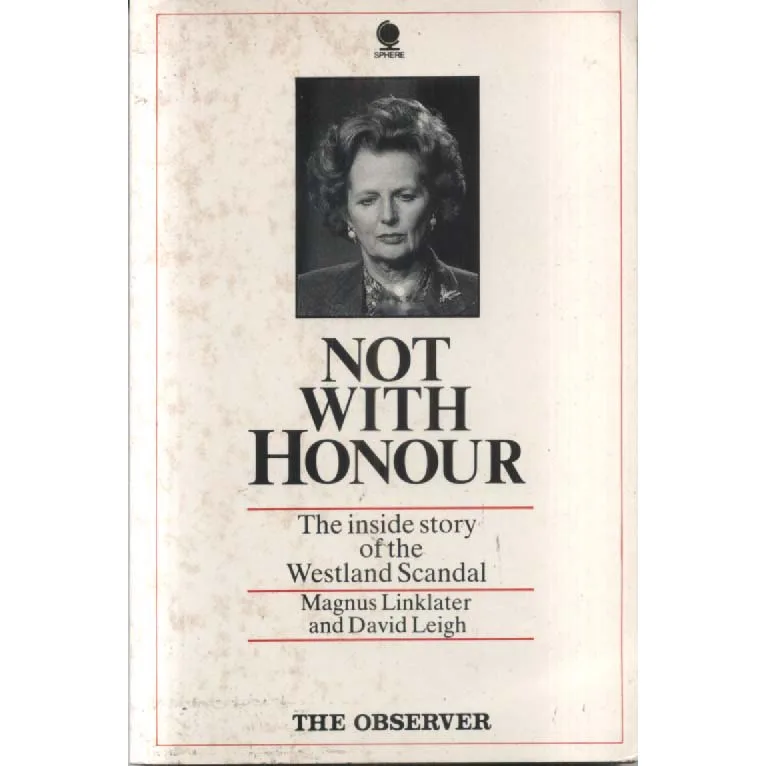
Publisher: Aphere
Format: Paperback
ISBN: 9780722155462
Not With Honour (1986) – Magnus Linklater and David Leigh
Sphere Books | ISBN: 9780722155462
Condition: Fair – Cover Mottling, Less Pronounced Than in the Scan | Sold by Crappy Old Books
Espionage. That most glamorous of professions, at least according to people who have never actually done it. In the cinema, spies wear immaculate dinner jackets, drive expensive cars and spend their evenings seducing beautiful strangers while saving Western civilisation between cocktails. In reality, the business more frequently involves memoranda, bureaucratic rivalries, suspicious colleagues, compromised secrets and the uncomfortable discovery that the person entrusted with protecting national security may actually be forwarding it to Moscow.
Welcome to Not With Honour, Magnus Linklater and David Leigh’s disturbing examination of Britain’s intelligence establishment and the extraordinary scandals that exposed some of its most embarrassing weaknesses.
For much of the twentieth century, Britain’s security and intelligence services cultivated an image of discreet professionalism, patriotic dedication and unquestionable loyalty. Unfortunately, beneath the polished exterior of the establishment lurked an assortment of ideological sympathisers, ambitious officials and individuals whose definition of national service appears to have included assisting the Soviet Union.
The Cambridge spy scandals provided particularly spectacular evidence that an expensive education, excellent social connections and the ability to behave convincingly at an embassy reception were not necessarily reliable indicators of patriotism.
Kim Philby, Guy Burgess, Donald Maclean and Anthony Blunt became notorious examples of how deeply Soviet intelligence had penetrated Britain’s privileged institutions. Their activities raised deeply uncomfortable questions about recruitment, supervision, accountability and the tendency of establishment figures to assume that people from the correct social background must surely be trustworthy.
Linklater and Leigh investigate the murky world of intelligence operations, institutional secrecy and political embarrassment, examining the failures and controversies that undermined confidence in Britain’s security establishment.
The fascinating problem with intelligence organisations is that secrecy, while essential to their work, also provides a remarkably convenient environment in which incompetence, misjudgement and questionable behaviour can remain concealed. When something goes wrong, the public is frequently informed that the details cannot be disclosed for reasons of national security.
A wonderfully efficient arrangement, particularly for anybody responsible for the mistake.
The authors approach their subject with the investigative determination of journalists confronting institutions whose principal instinct is to reveal as little as possible. Their account belongs to a period when public scrutiny of Britain’s intelligence services was growing and uncomfortable questions about the conduct of powerful officials were becoming increasingly difficult to dismiss.
Published in the mid-1980s, against the background of Cold War suspicion and political controversy, the book offers an absorbing glimpse into an era when the struggle between East and West was conducted as much through secret files and clandestine relationships as through missiles and military alliances.
This 1986 Sphere paperback, offered in Fair condition by Crappy Old Books, has mottling on the cover, although this appears more pronounced in the scan than on the book itself. An honest reading copy for those more interested in the revelations inside than achieving a flawless display on the bookshelf.
A compelling acquisition for readers interested in British intelligence, espionage history, political scandal and the remarkable capacity of supposedly trustworthy institutions to embarrass themselves.
A fascinating examination of secrecy, betrayal and the uncomfortable distinction between serving one’s country and merely occupying an important position within it.
Because when the nation’s most closely guarded secrets repeatedly end up in the hands of its enemies, somebody ought to ask a few questions.
Preferably before awarding everyone involved another honour.
Keep browsing: See more Politics books Other books by Magnus Linklater and David Leigh
